Choosing a kitchen benchtop
Your kitchen benchtops are not only a big impact style statement—but they’re also the hardest working surfaces in your kitchen—and they need to last the distance.
Share this
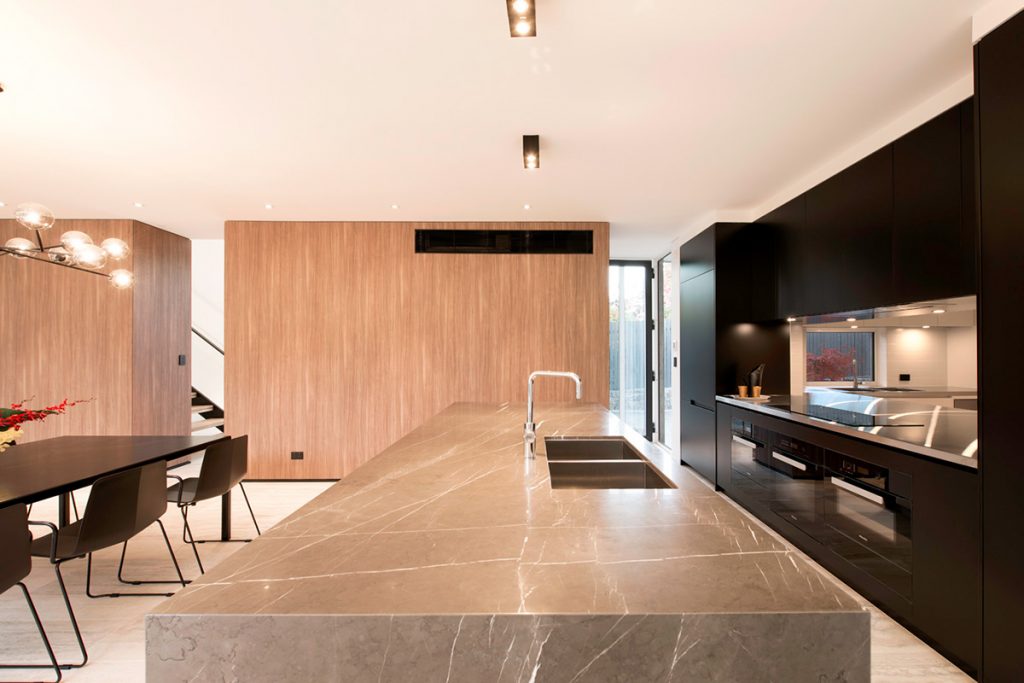
Choosing the right material is one of the most important decisions you will make, and a number of things need to be considered: functionality, durability, ease of cleaning, style, colour, surface finish, brand and of course price, will all be factors. Here is a rundown of the modern surfaces on offer.
Surface laminate
Thanks to advances in printing technology, you can have access to a myriad of stylish and contemporary looks in a cost-effective way compared to other benchtop surfaces. High pressure laminate (HPL) is formed around a thick substrate to make a laminate benchtop, which can deliver profiles such as bullnose or more contemporary slab-like stone looks. A range of edging options including laminate and acrylic products offer the flexibility to create a colour matched square-edge—without the traditional black line—to complete the look.
Engineered stone
Engineered stone is a desirable material for many kitchen applications based on its durability, stain resistance, choice of modern colours and a variety of edge profiles. The product is a composite material made of small to medium pieces of stone bound together by resins.
Natural stone
For a premium natural stone benchtop, there are a number of materials available including granite, marble, limestone and soapstone. You can also choose between several edge treatments including full or half bull-nosed, pencil edged or bevelled. A stonemason fabricates the benchtop with specialised cutting and finishing equipment. Just remember that the surface is porous so you’ll need to be extra careful to protect it from stains.
Polished concrete
Concrete is a tailor-made material that’s practical and aesthetic at the same time; and the opportunities for creative expression are many. It starts as a formless, watery mixture, which can be transformed into virtually any solid shape you desire.
Acrylic solid surfaces
Solid surfaces are manufactured from a coloured acrylic and, on occasion, polyester resin. An acrylic benchtop tradesperson fabricates the sheets, which can also be formed to create curves and organic shapes as part of the benchtop design. They can also be routered for functionality or design detailing.
Solid timber
Solid timber benchtops are manufactured from blocks of natural timber and coated with several layers of clear high-gloss lacquer. A variety of profiles are possible, including pencil round, bull-nose, and colonial. Overall, the look offers a natural warmth, richness and depth with toning dependant on the timber species. It will need to be oiled once a year to maintain sealing.
Stainless steel
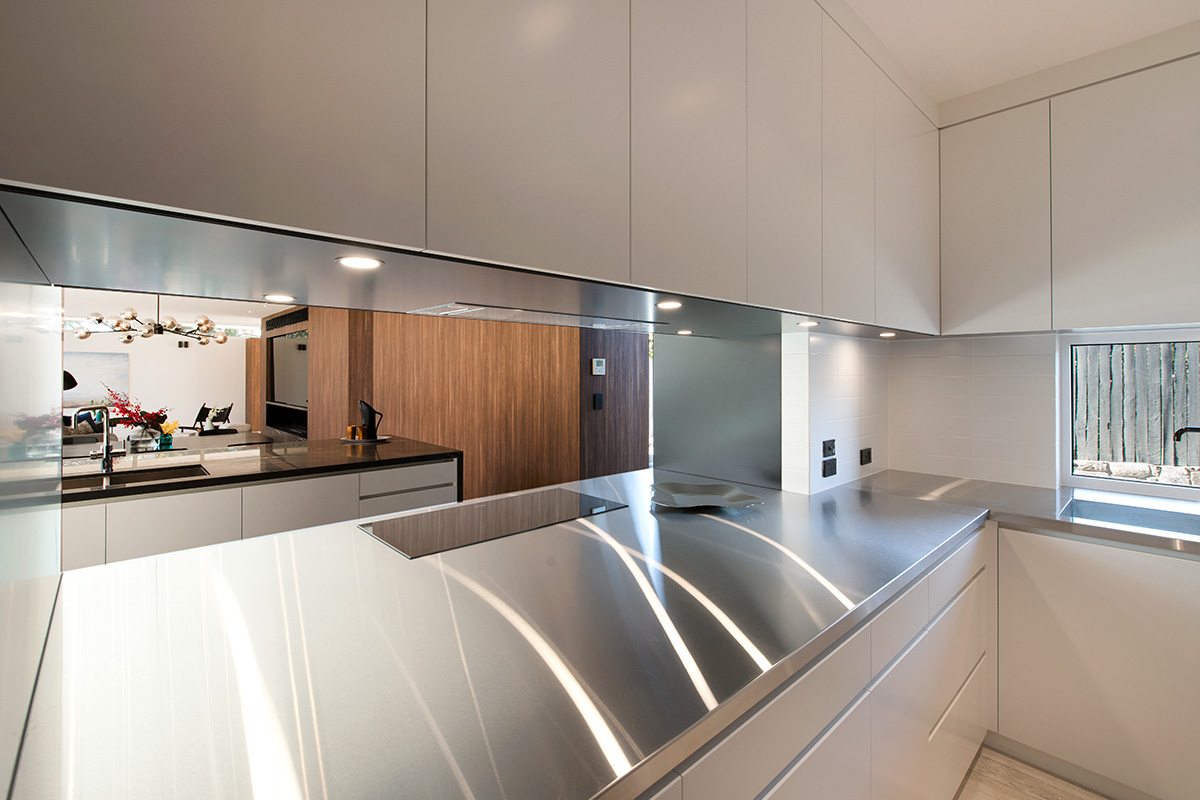
There’s a reason stainless steel is a favourite amongst chefs. Hardworking and heat-resistant, stainless steel doesn’t corrode, rust or stain like regular steel. An alloy combination of chromium and iron, it comes in various grades and types so when you’re looking to add stainless steel to your kitchen, it’s important to choose a grade that will suit the use it’s intended for.
Ultra compact surfaces
As the name suggests, the natural materials found in glass, porcelain and quartz are put under extreme heat and pressure – replicating the work that Mother Nature does over millions of years to produce granite. The result is an incredibly durable product that is five times the strength of granite. As well as being strong, it’s also stain resistant, scratch resistant, heat resistant, non-porous and is available in a huge range of colours and finishes.